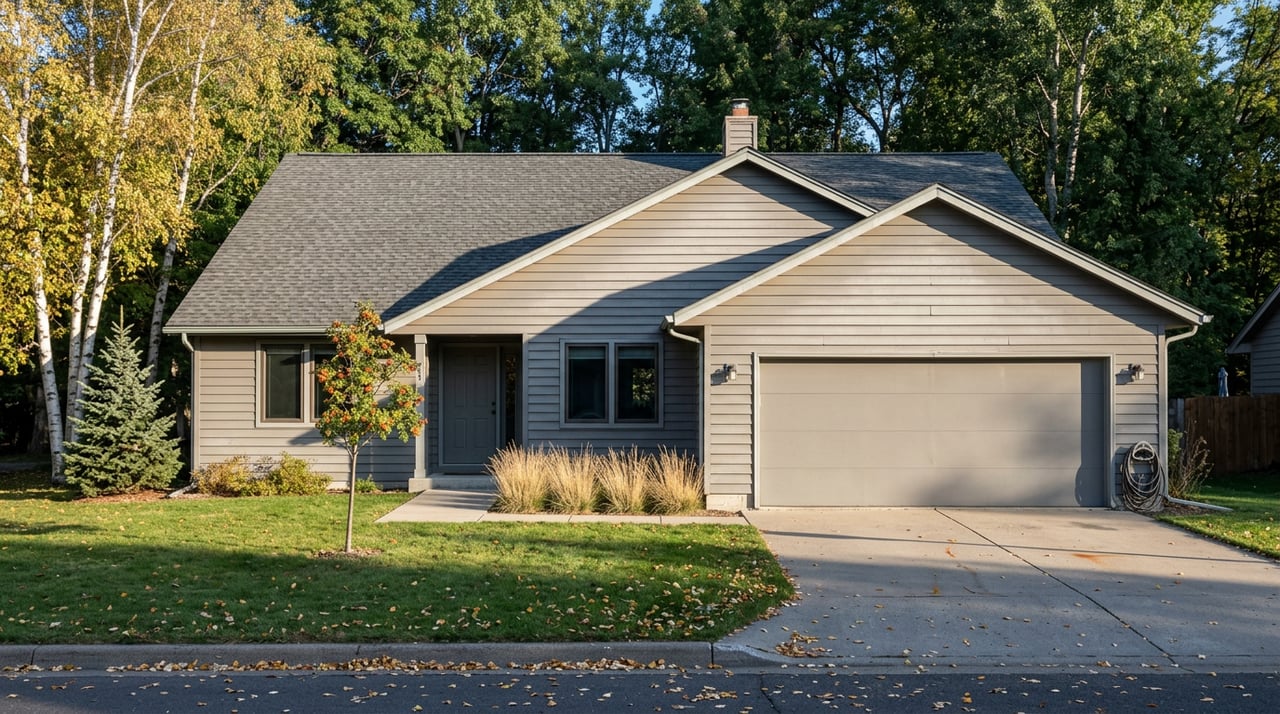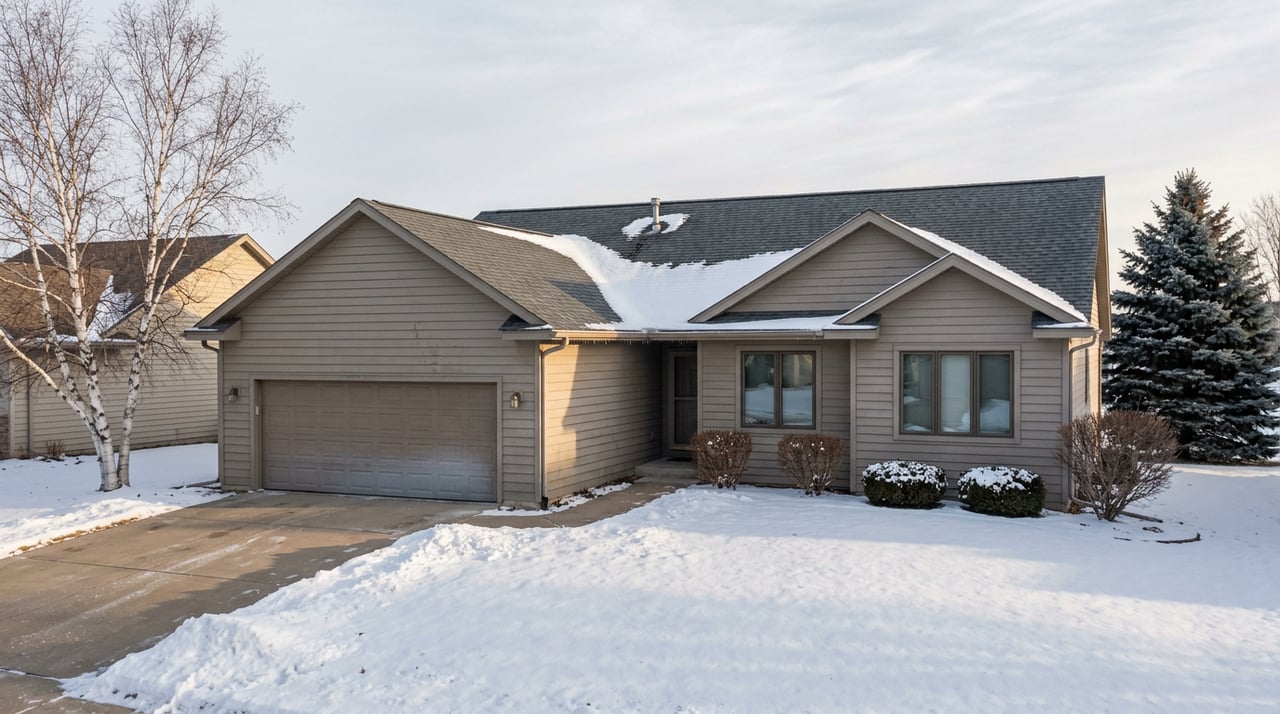
If you're looking at a home in Eagle River, you already know it falls inside the Municipality of Anchorage. What most buyers don't know, and what rarely comes up until the first heavy snow of the season, is that the Municipality's own Street Maintenance division does not plow most Eagle River roads. According to Anchorage's official snow and ice control plan, most streets in Eagle River, along with the Hillside and Girdwood, are privately maintained, either by a road service area or a private association.
That single sentence changes how you should read a listing. It means the house you're touring might sit on a road funded by a separate tax assessment with its own elected board, or on a street a homeowners association literally owns and pays a contractor to clear, or on a state highway that Anchorage plows only because of a special agreement that has nothing to do with your property taxes. None of that shows up in the square footage or the photos. All of it shows up the first time it snows eight inches overnight and you're trying to figure out who to call.
Three Different Owners, One Zip Code
Eagle River's roads fall into roughly three buckets, and the difference between them is not cosmetic.
The first is the Chugiak/Birchwood/Eagle River Rural Road Service Area, known locally as CBERRRSA. This is the road authority for most of Eagle River outside the private subdivisions, and it functions almost like its own small government. It has an elected Road Board, it covers about 350 lane miles, and it runs on a budget close to $8 million a year, most of which goes to a single contractor, McKenna Brothers Paving, under an agreement worth up to $7 million annually. Property owners inside CBERRRSA's boundary pay into it through a dedicated tax assessment that is separate from the general fund that plows streets in the Anchorage Bowl.
The second bucket is private roads owned outright by a homeowners association. At least 20 distinct HOAs operate in Eagle River, and several of the larger ones own their pavement the same way they own a clubhouse or a playground. Eaglewood, one of the biggest, has more than 900 homes on over 250 acres and owns its own streets, street lights, sidewalks, and lighted trail system. Eagle Crossing, a smaller planned community, covers 233 homes on streets including Mills Bay Drive. Brandywine, platted in 1985, sits on a cluster of streets named Rachel Avenue, Chardonnay Circle, Chablis Circle, Sauvignon Circle, and Beaujolais Circle and Drive. None of these roads belong to CBERRRSA or to the Municipality. They belong to the association, and the association decides how they get plowed.
The third bucket is the smallest but the most confusing: state highways and a handful of local segments that Anchorage maintains under a Transfer of Responsibility Agreement, or TORA, where the state pays the Municipality to do the plowing as if the road were a city asset. Reporting from the Anchorage Daily News on the region's road jurisdiction found that the state and Municipality have 41 of these agreements in place, including a street maintenance program specific to Eagle River. So a road that looks and feels like any other Anchorage street might technically be state property, maintained under a contract most residents have never heard of.
| Who maintains it | Who pays | When plows show up | Who you call |
|---|---|---|---|
| CBERRRSA (most of Eagle River) | Dedicated service-area tax on your property tax bill | Main and collector roads after 2 inches; side streets after 4 inches, within 24 hours | Eagle River Street Maintenance Dispatch |
| Private HOA (Eaglewood, Eagle Crossing, Brandywine, and others) | HOA dues, set by the association's board | Whatever the association's contract specifies | Your HOA board or management company |
| State road under a TORA | State funds, administered through the Municipality | Same municipal winter schedule as Anchorage Bowl streets | Anchorage Street Maintenance Dispatch |
What Actually Happens When It Snows
Inside CBERRRSA, the rules are specific. Contract crews are dispatched to plow main and collector routes once accumulation hits 2 inches, and they keep working until the snow stops. Side streets wait for 4 inches and then get cleared within 24 hours of the contractor being sent out. That is a real, published standard, not a guess, and it means side-street residents in Eagle River can expect a noticeably different response time than someone living on a collector road a few blocks away.
One rule applies everywhere, regardless of which system maintains your street: clearing driveway and mailbox snow berms is entirely the property owner's job. CBERRRSA's own Road Board has stated this outright, and it lines up with the general Municipal code, which prohibits shoveling driveway snow back into the street.
Private HOAs draw the line in their own way, and it is not always intuitive. Hannah Jane Place, a smaller Eagle River association, spells out in its own community notice that snow removal from individual driveways is the responsibility of each owner or tenant, not the HOA or its winter contractor, and that residents are barred from contacting the plow company directly because doing so would violate the association's service agreement. If you buy into a community like that expecting the same driveway service the association provides for common areas, you'll be disappointed the first time it snows.
When Two Systems Share a Snowplow, It Becomes a Municipal Dispute
The separation between these funding pools is not just an accounting detail. In January 2023, after a series of heavy December storms overwhelmed the Municipality's own crews, Anchorage temporarily brought CBERRRSA's contractor into the Anchorage Bowl to help dig out city streets, according to Anchorage Daily News reporting. Assembly members later pressed the administration on how that arrangement was tracked and paid for, since CBERRRSA funds are supposed to stay inside CBERRRSA's boundary. One Assembly member called the situation "gray" and questioned whether the billing crossed a legal line.
That controversy is useful for a buyer to know about for one reason: it proves these are not interchangeable systems with different names. CBERRRSA money, HOA dues, and general Municipal tax dollars are separate pots, governed by separate boards, and mixing them creates real friction even at the government level. If it's complicated for the Assembly to sort out, it's worth doing your own homework before you assume "part of Anchorage" tells you anything about who will show up after a storm.
The State Framework Behind the Private Roads
The homeowners associations that own their own streets aren't operating in a gray area. Alaska law specifically authorizes subdivisions to form an HOA under state regulation to construct or maintain roads, trails, easements, and drainage within the subdivision, particularly in cases where a local government hasn't taken over that responsibility. Once a subdivision is set up this way, membership typically becomes automatic for anyone who buys a lot afterward, dues and all. That is worth knowing if you're touring a home in one of Eagle River's platted subdivisions and the listing doesn't mention an HOA by name. Ask anyway. The association may predate the current owner's memory of when dues started, and Alaska's Division of Mining, Land, and Water keeps a public trail through county recorder's offices if you want to confirm one exists.
What to Ask Before You Write an Offer
A few questions can save you a confused phone call in November:
- Is this street inside CBERRRSA, or is it maintained by a private association?
- If it's a private association, does the HOA own the road, and what does the covenant say about snow removal and dues?
- Is there a separate tax line item on the property's assessment tied to a road service area?
- If the street looks like a state highway, is it under a Transfer of Responsibility Agreement, and who actually dispatches the plow?
- Who do current residents call when their street hasn't been cleared, and how long does it typically take?
Your title company will surface recorded HOA covenants, but the tax assessment side of a CBERRRSA property and the practical service-level differences between systems are things worth asking your agent to confirm before you're under contract, not after your first winter in the house.
Quick Questions
Does being part of the Municipality of Anchorage guarantee municipal plow service in Eagle River? No. Most Eagle River streets are maintained either by CBERRRSA, a separately taxed road service area, or by a private HOA that owns the road outright. Only a smaller set of state roads maintained under municipal agreements gets the same schedule as the Anchorage Bowl.
Will I see CBERRRSA charges on my property tax bill? Properties inside the CBERRRSA boundary are assessed a dedicated tax to fund the service area's roughly $8 million annual budget. This is separate from HOA dues, which are billed privately by the association.
How is snow-plow timing different in Eagle River compared to central Anchorage? CBERRRSA's published standard calls for main and collector roads to be plowed once 2 inches of snow accumulate, with side streets waiting for 4 inches and cleared within 24 hours of dispatch. Private HOAs set their own standards in their governing documents.
Who clears the snow at the end of my driveway? Everywhere in Eagle River, regardless of which system maintains the street, clearing driveway and mailbox berms is the property owner's responsibility.
Questions like these are exactly what founder Kevin Sigafoos and the team built Top Homes Alaska to answer, drawing on decades of Alaska-specific construction and permitting experience to help buyers see past the listing sheet and into how a property actually functions once you own it. If you're looking at homes in Eagle River, or anywhere across Anchorage and the Mat-Su Valley, and want a clear read on what you're really signing up for, schedule your personal consultation and we'll walk through it together.